




 |
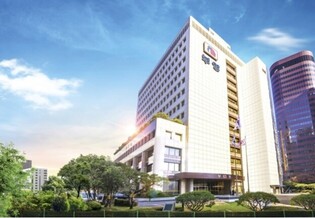
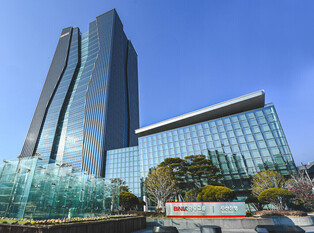
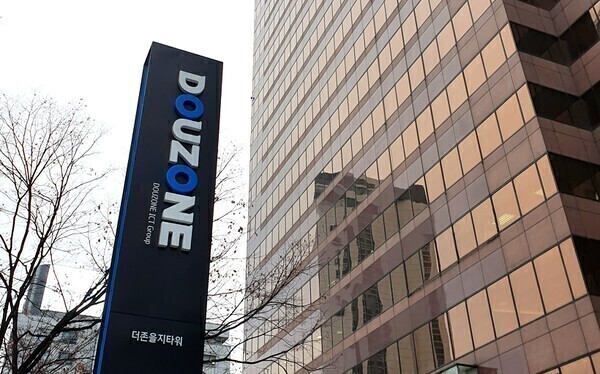
Headquarters of Douzone Bizon. (Photo: Company) |
[Alpha Biz= Kim Jisun] EQT announced on March 3 that its voluntary tender offer for Douzone Bizon, launched on Feb. 23 with the goal of delisting the company, has shown encouraging early signs.
According to EQT, approximately 9.48 million shares—equivalent to 52% of the total shares subject to the tender offer—were traded during the first five trading days following the announcement. Institutional and foreign investors were seen actively buying shares, while retail investors largely sold into the market.
During the same period, the share price remained slightly below the tender offer price of KRW 120,000 per share. As of Feb. 27, Douzone Bizon closed at KRW 118,400 on the Korea Exchange, about 1.3% below the offer price and the highest level since September 2020.
EQT said that in Korea’s capital market, three factors are typically viewed as benchmarks for a successful tender offer:
the stock price stabilizing slightly below the offer price,
retail selling matched by institutional and foreign buying, and
heavy trading volume in the early phase of the offer.
The firm noted that retail investors sold roughly 6.21 million shares during the first five trading days, with institutional and foreign investors absorbing most of the supply in what it described as a typical tender offer arbitrage pattern. In such cases, arbitrage investors aim to capture a margin of around 1% by purchasing shares on the open market and tendering them at the offer price.
The cumulative five-day trading volume represents about 33% of Douzone Bizon’s total outstanding shares and over half of the 18.16 million shares targeted in the offer. EQT cited previous successful delistings by private equity firms—including Lutronic, Jsys Medical, BusinessOn, and ViOL—where similar early trading patterns preceded successful completion.
Following the tender offer, EQT is reviewing a plan to complete the delisting through a comprehensive share exchange with cash consideration, as permitted under Korean commercial law. In that case, minority shareholders would sell their remaining shares to EQT in exchange for cash.
While past cases have seen cash consideration set at levels similar to the tender offer price, shareholders may face opportunity costs due to the two-month or longer period typically required between the close of the tender offer and completion of the share exchange process.
Alphabiz Reporter Kim Jisun(stockmk2020@alphabiz.co.kr)