




 |
Photo courtesy of Yonhap News |
[Alpha Biz= Kim Jisun] South Korea’s Fair Trade Commission (FTC) has imposed a combined KRW 272 billion (USD approx. 200 million) in fines on four major commercial banks for engaging in collusive information-sharing related to loan-to-value (LTV) ratios in the real estate-backed lending market.
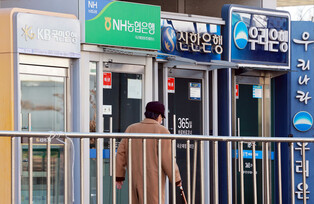
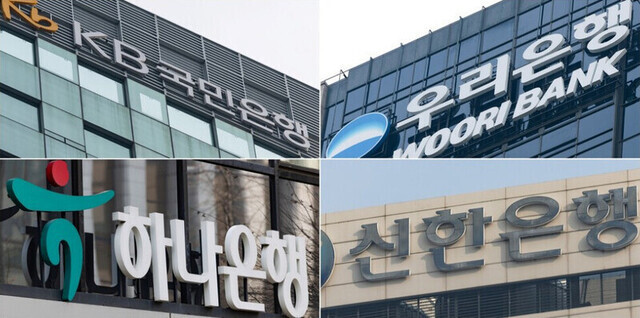
On the 21st, the FTC announced that KB Kookmin Bank, Shinhan Bank, Woori Bank, and Hana Bank exchanged and utilized LTV-related information with one another, thereby restricting competition in the real estate collateral loan market. The commission issued corrective orders prohibiting such conduct and levied administrative fines totaling KRW 272 billion.
LTV refers to the ratio that determines the maximum loan amount a bank can extend against real estate collateral. The FTC stated that LTV is a key transaction condition affecting loan amounts and interest rates. Lower LTV ratios can worsen borrowing conditions, as borrowers may need to rely on higher-interest unsecured loans to raise sufficient funds. Small and medium-sized enterprises and self-employed businesses, which depend heavily on collateralized loans, are particularly affected by banks’ LTV decisions.
According to the FTC’s investigation, the four banks exchanged extensive LTV information over long periods, ranging from a minimum of 736 cases to as many as 7,500 cases per bank. The information shared was not aggregated or processed data but comprehensive LTV details applied by property type and location, including apartments, multi-family housing, commercial buildings, officetels, factories, and other real estate nationwide. This enabled each bank to understand competitors’ LTV plans at the district and property-type level.
The FTC limited the scope of sanctions to conduct occurring after December 30, 2021, when amended provisions of the Fair Trade Act banning anticompetitive information-sharing took effect. This marks the first enforcement case under the revised regulation. Loan revenues related to transactions where government-mandated household LTV caps applied were excluded from the fine calculation.
The commission found that bank employees responsible for LTV decisions were clearly aware of the potential illegality and actively attempted to erase traces of information-sharing. In some cases, employees met in person to receive printed LTV materials, manually entered up to 7,500 data points into Excel files, and destroyed the original documents. Information-sharing practices were also systematically handed over when personnel changed.
The four banks adjusted their own LTV ratios by referencing competitors’ data, resulting in LTV levels remaining similar over extended periods. Their average LTV ratios were 7.5 percentage points lower than those of banks that did not participate in the information exchange, such as Industrial Bank of Korea, NongHyup Bank, and Busan Bank. For non-residential properties closely linked to corporate lending, including factories and land, the gap widened to 8.8 percentage points.
The FTC stated that the banks were able to avoid competition through LTV adjustments and stabilize operating profits as a result. Borrowers, meanwhile, suffered reduced choice, as the four banks—accounting for roughly 60% of the real estate-backed loan market—maintained similar LTV levels.
The fines imposed on the four banks are reportedly of similar magnitude. While banks expressed relief that the penalties were lower than initially expected by the market, they are considering filing administrative lawsuits. The banks argue that they did not intentionally collude and that, in practice, they had little choice but to reference other banks’ LTV standards, particularly for non-residential properties where market prices and regulatory caps are less clearly defined.
Some banks suggested that, as a long-term solution, the industry could consider collectively disclosing LTV standards through the Korea Federation of Banks to improve transparency and prevent future disputes.
Alphabiz Reporter Kim Jisun(stockmk2020@alphabiz.co.kr)