




 |
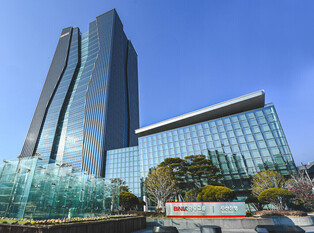
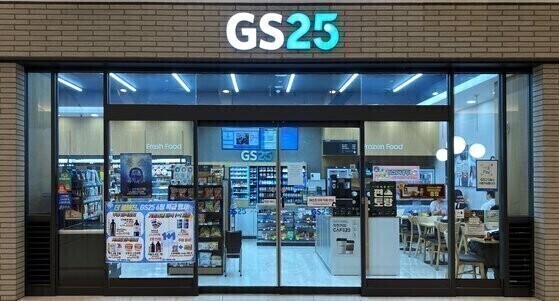
Exterior view of a GS25 convenience store in Yeouido, Seoul. (Photo courtesy of GS Retail) |
[Alpha Biz= Paul Lee] South Korea’s convenience store rivalry between CU and GS25 has entered a new phase, as GS25 declined to disclose its year-end store count—an unusual move that has fueled concerns about growth stagnation.
While CU increased its number of stores by 253 year-on-year and continued its expansion trend, GS25 chose not to publish its total store count. The decision marks a sharp contrast to previous years, when GS25 routinely disclosed detailed metrics including net store additions, average transaction value, and customer traffic growth.
Industry observers view the move as a sign that GS25 may be facing its first meaningful growth plateau in the 36 years since launching its convenience store business in 1990. Investor disappointment was swift: shares of GS Retail, which operates GS25, plunged 11% on the day of the earnings release.
Earnings Fall Short of Expectations
GS Retail reported fourth-quarter revenue of KRW 3.03 trillion and operating profit of KRW 53.3 billion, up 3.5% and 3.3% year-on-year, respectively. However, the results fell short of market expectations.
The underperformance was largely attributed to weakness in the convenience store division, which accounts for more than 70% of GS Retail’s overall business. In the fourth quarter, the division posted revenue of KRW 2.25 trillion and operating profit of KRW 24.8 billion. While revenue rose 2.5% year-on-year, operating profit declined 5.7%.
Analysts had anticipated an earnings rebound, given the low base effect from the fourth quarter of 2024, when operating profit had halved year-on-year amid domestic demand weakness and the spin-off of the company’s hotel business. Some market participants had previously suggested that a “big bath” accounting adjustment had been implemented under former CEO Huh Yeon-soo ahead of the appointment of current CEO Huh Seo-hong last year.
However, operating profit declined further compared to that already weak quarter, intensifying investor concerns. The company’s operating profit also fell short of the securities market consensus estimate of KRW 59.9 billion by roughly 11%—mirroring the exact percentage decline in its share price on the announcement day.
Strategy Questions Mount
GS Retail has emphasized a shift toward “quality-focused management” rather than aggressive store expansion. However, challenges extend beyond footprint growth. Performance in the convenience store segment remains under pressure, while new business initiatives—including startup investments and overseas expansion—have yet to deliver meaningful returns.
With restructuring measures underway but no clear new growth engine emerging, market watchers are questioning whether more fundamental changes will be needed to restore momentum.
Alphabiz Reporter Paul Lee(hoondork1977@alphabiz.co.kr)