




 |
Photo courtesy of Yonhap News |
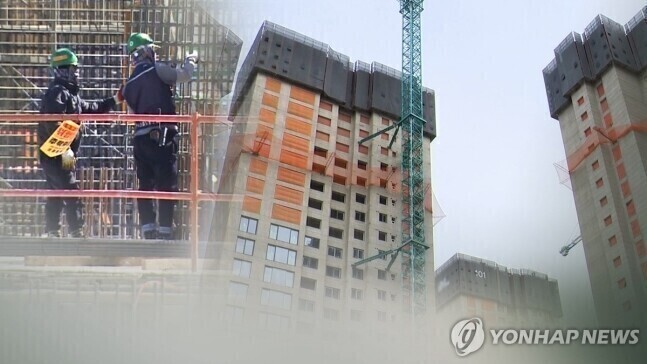
[Alpha Biz= Paul Lee] Regional construction companies in Daegu and North Gyeongsang Province are struggling to escape a prolonged downturn, as a sharp rise in business closures underscores the severity of the local construction and real estate slump.
According to the Construction Industry Knowledge Information System (KISCON) under the Ministry of Land, Infrastructure and Transport, a total of 14 general construction firms in the Daegu–North Gyeongsang region filed for business closure this year as of March 24—three in Daegu and 11 in North Gyeongsang Province. The figure already accounts for nearly 30 percent of the total closures recorded throughout last year, signaling an alarming trend early in the year.
Industry sources noted that a subsidiary of Company A—a regional general contractor that entered court receivership in December last year—also filed for closure on March 12, adding to concerns across the local construction sector.
The region has been weighed down by a prolonged economic slowdown, rising raw material costs, and mounting risks among builders. Delays in housing project completions due to unsold inventory, coupled with difficulties in industrial and commercial construction projects, have pushed the local real estate market deeper into what industry observers describe as a “quagmire of stagnation.”
Last year alone, 47 general construction firms in the region shut down—21 in Daegu and 26 in North Gyeongsang Province. This followed 48 closures in 2023 and 34 in 2024. Over the past three years, a total of 129 general contractors have exited the market, more than double the 50 firms that closed during the post-pandemic transition period from 2020 to 2022.
Specialized construction firms are facing similar pressures. Since the start of this year, 67 specialized contractors—16 in Daegu and 51 in North Gyeongsang—have reported closures, equivalent to 24.2 percent of last year’s total of 277 closures nationwide. In the region, 245 specialized contractors closed in 2023 and 286 in 2024, highlighting the sustained deterioration in business conditions.
Industry officials attribute the trend to shrinking construction volumes, delayed payments, and tightening liquidity, which have left small and mid-sized contractors unable to continue operations.
Prospects for a near-term recovery remain dim. While the number of unsold housing units in the region has declined to around 5,900, more than half remain unsold even after completion. Project delays and postponed construction starts are also becoming more common.
Rising construction costs are further straining the sector. Inflation in building expenses has intensified financial pressure, particularly for smaller contractors with limited access to capital, raising concerns that additional closures may follow unless market conditions improve.
알파경제 Paul Lee 특파원(hoondork1977@alphabiz.co.kr)