




 |
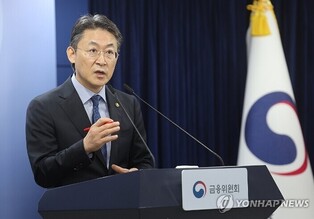
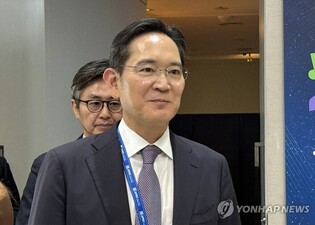
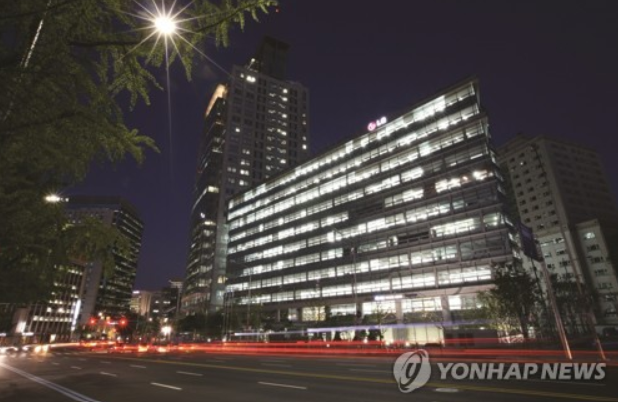
Photo courtesy of Yonhap News |
[Alpha Biz= Paul Lee] LG Household & Health Care has delivered a disappointing first set of results under its new chief executive, raising concerns about its ability to revive its cosmetics business amid rapidly shifting global K-beauty trends.
While the presence of K-beauty continues to expand globally—driven largely by small and indie brands across platforms such as Amazon, TikTok Shop, and Costco—LG Household & Health Care’s beauty division has struggled to find a clear path to recovery. Analysts say the downturn cannot be attributed solely to unfavorable industry conditions, prompting calls for a comprehensive review of the company’s business structure, including its long-standing M&A-driven growth strategy.
According to recent regulatory filings, LG Household & Health Care posted consolidated revenue of KRW 6.36 trillion and operating profit of KRW 170.7 billion in 2025. Revenue fell 6.7 percent year-on-year, while operating profit plunged 62.8 percent, marking a fourth consecutive annual decline. Performance deteriorated further in the fourth quarter, when revenue dropped 8.5 percent to KRW 1.47 trillion and the company recorded an operating loss of KRW 72.7 billion.
The weak earnings have been reflected in the share price. On February 6, LG Household & Health Care closed at KRW 261,500 on the Korea Exchange, down sharply from levels above KRW 1 million in early 2022, reducing the former “one-million-won stock” to roughly one-quarter of its peak value within four years.
The cosmetics business has been the biggest drag on performance. Annual beauty revenue fell 16.5 percent to KRW 2.35 trillion, while the segment posted an operating loss of KRW 97.6 billion, driving the company’s overall earnings decline. In the fourth quarter alone, beauty sales dropped 18 percent to KRW 566.3 billion, with an operating loss of KRW 81.4 billion.
The company attributed the losses to adjustments in duty-free channel volumes and large one-off costs, including a voluntary retirement program, despite solid overseas sales of strategic brands such as The Face Shop and VDL and new product launches from The Whoo and LG Pra.L. In October last year, LG Household & Health Care implemented voluntary retirement for beauty sales and marketing employees aged 35 and older, citing workforce optimization in response to the downsizing of traditional offline channels such as duty-free shops and department stores. The inclusion of employees in their 30s, however, underscored growing internal concerns over the depth of the downturn.
Even after accounting for one-off expenses, analysts point to the collapse of the company’s long-standing growth formula. For years, LG Household & Health Care expanded on the back of a “China + duty-free + luxury” strategy, benefiting from surging Chinese demand, high-margin duty-free sales, and premium brands such as The Whoo. That model has weakened sharply as China’s consumption recovery stalled, demand from daigou resellers largely disappeared, and duty-free channels lost their status as profit engines. In the fourth quarter, China sales fell 16.6 percent year-on-year.
Critics also argue that the company failed to adapt quickly enough to shifting global K-beauty dynamics. The epicenter of K-beauty demand has moved from China to North America, yet LG Household & Health Care’s North American revenue still accounts for only around 10 percent of total sales, despite a 7.9 percent increase in U.S. sales in the fourth quarter. This contrasts sharply with the rapid overseas expansion of smaller players such as APR, which has posted strong growth in the U.S. and Japan, and with total exports by small and mid-sized Korean cosmetics firms surpassing USD 8 billion.
Market observers have long warned that LG Household & Health Care’s beauty portfolio is overly dependent on a small number of luxury brands, making it difficult to quickly replace revenue engines when consumer preferences shift. In contrast, today’s K-beauty market favors fast-moving indie brands that operate short cycles across planning, production, marketing, and distribution, rapidly scaling SKUs when products gain traction—an approach fundamentally different from the slower decision-making processes of large conglomerates.
Moreover, recent K-beauty growth has been driven not by duty-free channels but by digital commerce and health-and-beauty retailers such as Olive Young, alongside global e-commerce platforms. Affordable derma and functional products typically build scale first before premium offerings are layered on top. With a portfolio weighted heavily toward premium brands, LG Household & Health Care has been hit harder than peers by the channel shift.
Jeong Hansol, an analyst at Daesin Securities, said, “As high-margin channels contract, there is insufficient visibility on alternative growth engines to replace them.” He added that while expanding into high-volume channels is critical to defending profitability when margins decline, LG Household & Health Care’s transition has been slow.
Alphabiz Reporter Paul Lee(hoondork1977@alphabiz.co.kr)