




 |
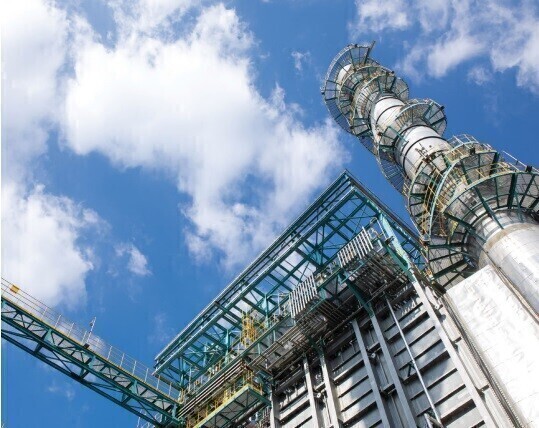
Photo: Korea Zinc (from 2022 Sustainability Report) |
[Alpha Biz= Paul Lee] On December 17, NICE Credit Rating assessed Korea Zinc’s decision to invest in an integrated non-ferrous metal smelter in the United States, stating that “the impact on financial stability will be limited in the short term, but surplus cash flow is expected to be constrained and financial obligations will increase in the medium term.”
Korea Zinc announced on December 15 that it will proceed with the smelter investment through its U.S. subsidiary, Crucible Metals, LLC, with an expected investment of approximately USD 7.4 billion (KRW 10.9 trillion).
The funding plan involves raising about KRW 2.86 trillion (USD 1.94 billion) through the joint venture Crucible JV, jointly funded by Korea Zinc, the U.S. government, and strategic investors in the U.S., while Korea Zinc will directly invest around KRW 860 billion (USD 585 million). The remaining funding will come from U.S. government policy finance programs, subsidies, and loans from financial investors.
According to researchers Kim Hyung-jin and Park Se-young, USD 1.9 billion of the USD 2.5 billion to be invested in Crucible Metals by 2026 will be raised via third-party allocation capital increase, while Korea Zinc’s own contribution of USD 585 million is scheduled by 2029. Thus, the short-term financial burden is limited.
However, the researchers noted that as Korea Zinc’s guaranteed borrowings for Crucible Metals are executed sequentially alongside the project, surplus cash flow will remain constrained and debt obligations will gradually increase until the smelter’s completion.
The report highlights that the investment is expected to strengthen Korea Zinc’s business competitiveness and scale in the U.S. market. The U.S. smelter will have approximately 50% of the production capacity of Korea Zinc’s Onsan Smelter and will produce 13 non-ferrous metals and semiconductor-grade sulfuric acid. The project will significantly expand the company’s production capacity in key products such as zinc, lead, gold, and silver, and also increase production and sales of strategic minerals such as antimony, bismuth, and indium.
The researchers emphasized the need for monitoring due to ongoing governance disputes, noting that Korea Zinc’s largest shareholder YPC and related parties of Yeongpoong are in a management dispute, and Yeongpoong with MBK Partners have filed lawsuits citing increased financial burden and potential changes in governance regarding the U.S. smelter investment.
Alphabiz Reporter Paul Lee(hoondork1977@alphabiz.co.kr)