




 |
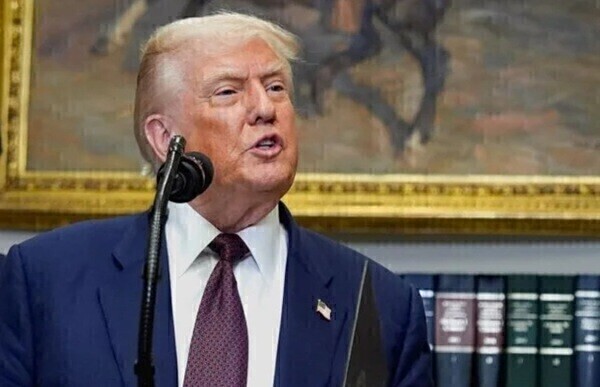
Donald Trump, President of the United States. (Photo courtesy of Yonhap News Agency) |
[Alpha Biz= Kim Jisun] Following a U.S. Supreme Court ruling that deemed reciprocal tariffs unlawful, more than 6,000 Korean companies are expected to be eligible for refunds of tariffs already paid. However, uncertainty remains over whether refunds will materialize, as cases where tariff settlements have already been finalized face complex appeals procedures, and U.S. President Donald Trump has taken a hardline stance, stating that he will “fight the ruling in court.”
According to the Korea Customs Service on February 22, all products subject to reciprocal tariffs imposed by the United States since April 5 last year under the International Emergency Economic Powers Act (IEEPA) are eligible for refunds. In addition, product-specific tariffs on steel, aluminum, and copper derivatives may also be refundable for the non-metal value portions of products that do not actually contain steel, aluminum, or copper.
As a general rule, tariff refunds must be claimed by the U.S. importer of record. However, in cases where Korean exporters used Delivered Duty Paid (DDP) terms—under which the exporter pays U.S. import duties on behalf of the importer—the Korean exporter may directly apply for refunds with U.S. Customs and Border Protection (CBP). The Korea Customs Service estimates that of the approximately 24,000 Korean companies that exported tariff-affected goods to the United States, about 25%, or roughly 6,000 firms, conducted exports under DDP terms.
Even in DDP transactions, refunds can only be claimed if the Korean exporter or its U.S.-based affiliate or subsidiary was listed as the Importer of Record (IOR) on customs declarations. The Korea International Trade Association (KITA) cautioned that when exports were conducted through local U.S. trading partners, those partners are often listed as the IOR, which could limit the refund rights of Korean exporters.
If tariff refund provisions are included in contracts with U.S. importers, refunds received by the importer may be distributed accordingly. In the absence of such provisions, Korean exporters are advised to engage proactively with their U.S. counterparts, taking into account the actual tariff burden structure.
Refund procedures differ depending on whether tariff settlements have been finalized. Prior to settlement, exporters may file a Post Summary Correction (PSC) relatively easily by the earlier of 300 days from cargo release or 15 days before the scheduled liquidation date.
Once settlement has been completed, however, exporters must file a formal protest with CBP within 180 days of the liquidation date, accompanied by written statements and relevant legal interpretations. For Korean exporters subject to reciprocal tariffs since April last year, tariff settlements are beginning to be finalized this month. If CBP rejects the protest, companies may have no choice but to pursue litigation before the U.S. Court of International Trade (CIT).
Alphabiz Reporter Kim Jisun(stockmk2020@alphabiz.co.kr)