




 |
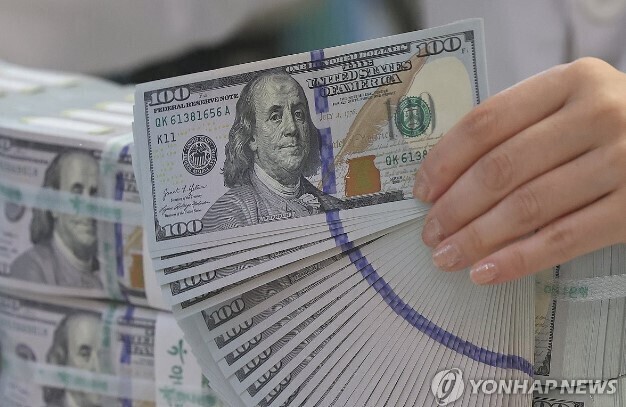
Photo courtesy of Yonhap News |
[Alpha Biz= Paul Lee] The Korean won’s recent surge to 1,480 per U.S. dollar is rattling financial markets, raising fears that a volatile exchange rate could slow overall economic activity and push up inflation.
According to financial sources on December 21, last week (December 15–19) saw the won trading within a 1,470–1,478 range, up from 1,466–1,477 the previous week. The intraday high of 1,480 occurred on December 17, as the currency opened at 1,474.5 and strengthened around 11 a.m., driven by foreign capital outflows and a strong U.S. dollar. This was the first time the won reached the 1,480 level since April 9, when it touched 1,487.6.
In response, the Bank of Korea temporarily intervened with a foreign exchange swap with the National Pension Service. The measure briefly stabilized the currency, lowering the rate to 1,474.5 on December 18, but it rebounded to 1,478 the following day.
While not signaling a traditional financial crisis, the central bank acknowledged the risk as a “crisis of inflation and inequality” and revised its inflation outlook. Last month, it expected year-end and early-year inflation to stabilize around 2%, but now forecasts a potential rise to the low-to-mid 2% range if the current exchange rate persists.
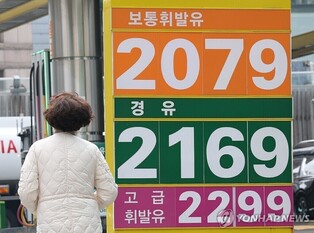
A weaker won raises import prices, which may eventually feed into consumer prices, potentially dampening consumption and slowing economic recovery. Export-heavy companies may benefit from a stronger exchange rate, but domestic and import-reliant firms could face setbacks. Analysts also warned that foreign investor sentiment may worsen, accelerating capital outflows.
Concerns over the high exchange rate are spreading across related industries, reflecting growing anxiety in both financial and real sectors.
알파경제 Paul Lee 특파원(hoondork1977@alphabiz.co.kr)