



 |
Photo = Yonhap news |
[Alpha Biz= Kim Jisun] The Korea Employers Federation (KEF) released a report on April 28 titled "Key Trends and Implications of Recent Employment Patterns," highlighting a continued contraction in South Korea’s labor market.
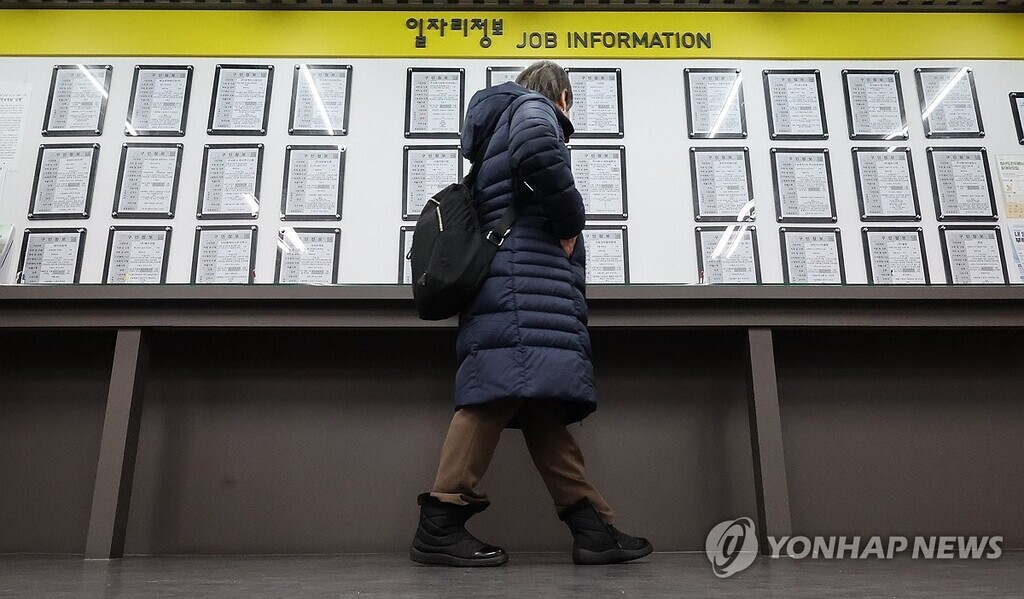
According to the report, the number of wage workers with less than three months of tenure—a proxy for new hires—has declined for seven consecutive quarters since the first quarter of 2023. While the first quarter of 2023 saw a modest increase of 23,000 new hires, the second quarter recorded a year-over-year drop of 149,000, followed by decreases of 108,000 and 7,000 in the third and fourth quarters, respectively. The trend continued throughout 2024, with decreases of 114,000, 118,000, 82,000, and 122,000 across each quarter.
As job openings shrank, university graduates increasingly opted to delay graduation or apply exclusively to high-quality jobs at major corporations. The number of new university graduates in 2023 was 195,000—the lowest since 2020—while the number of deferred bachelor's degree recipients rose to 18,000, the highest since 2021.
Involuntary unemployment, which includes layoffs, recommended resignations, and restructuring, also surged. In 2023, involuntary unemployment reached 1.373 million, up 8.4% from the previous year. The construction sector (+39,000) and real estate sector (+9,000) experienced particularly sharp increases, reflecting a broader downturn in the construction industry.
Ultra-short-term employment, defined as working fewer than 15 hours per week, hit a record high of 1.406 million in 2023, up 440,000 compared to the early pandemic period in 2020. KEF attributed this surge to factors such as stricter 52-hour workweek regulations and the financial burden of mandatory paid holidays, leading employers to prefer short-term labor.
Meanwhile, the proportion of self-employed workers among the total workforce fell to 19.8% in 2023, marking the first time it has dropped below 20% since the government began tracking the data in 1963. Notably, while self-employment in the retail sector decreased by 48,000, sectors tied to emerging industries—such as information and communications (+16,000) and professional, scientific, and technical services (+6,000)—saw moderate growth.
KEF emphasized that these trends reflect profound structural changes in South Korea's labor market and called for policies to support sustainable job creation and workforce flexibility.
알파경제 Kim Jisun Reporter(stockmk2020@alphabiz.co.kr)