




 |
Photo courtesy of Yonhap News |
[Alpha Biz= Yoon Ju-ho, CEO of Umbrella Research] A recent episode in Korea’s financial markets has exposed uncomfortable truths about both corporate transparency and research independence.
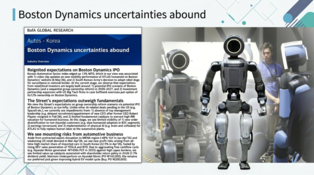
The controversy began with a remark by Song Ho-sung during an overseas investor meeting, where he stated that the optimal timing for an IPO of Boston Dynamics would be around 2028, when mass production begins. The comment was initially included in a research report but was later removed following strong objections from Hyundai Motor Group.
The explanation that the analyst had “misinterpreted” the comment is difficult to accept. In a formal setting attended by institutional investors, it is highly unlikely that an analyst would fabricate such specific details at the risk of professional credibility.
The more plausible explanation is that the remark revealed an inconvenient truth: the fundamental limitations of the robotics business.
 |
Photo courtesy of Yonhap News |
Reality Check on the Robotics Business
The reference to 2028 effectively signaled that meaningful commercialization and profitability for Boston Dynamics may take longer than market expectations.
Investors had anticipated a much earlier IPO, potentially tied to succession planning and governance restructuring within Hyundai Motor Group. However, external assessments—including recent reports by global investment banks—have already warned that such expectations may be overly optimistic.
Challenges such as leadership transitions, slow progress in consumer-facing markets, and limited near-term profitability suggest that the path to sustainable earnings is still uncertain. In this context, the 2028 timeline can be interpreted as an implicit acknowledgment by management of these constraints.
 |
Photo courtesy of Yonhap News |
Information Asymmetry and Market Impact
In capital markets, a delayed IPO timeline often implies delayed profitability. For global investors, such signals can quickly translate into bearish positioning.
If foreign institutional investors interpreted the remark as a sign of prolonged earnings uncertainty, it could have influenced trading strategies. Meanwhile, domestic investors may have been left with incomplete information following the revision of research reports, raising concerns about information asymmetry.
Implications for Research Independence
The incident also highlights deeper structural issues in Korea’s capital markets.
If corporate pressure leads to the modification or removal of analyst insights, it undermines the credibility of research and erodes investor trust. While such actions may mitigate short-term market reactions, they risk long-term reputational damage.
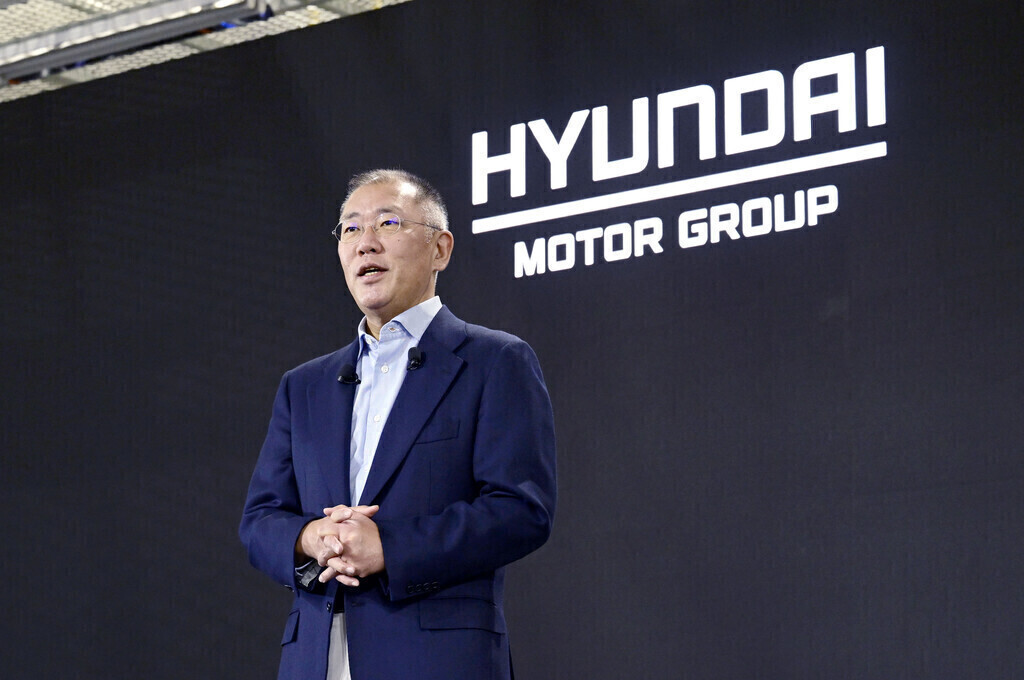 |
Euisun Chung, Executive Chair of Hyundai Motor Group. (Photo: Yonhap News Agency) |
A Call for Transparency
Boston Dynamics remains a strategically important asset with long-term potential. However, the market ultimately values transparency and credible financial performance over optimistic narratives.
Rather than suppressing inconvenient disclosures, companies should focus on demonstrating a clear path to profitability and sustainable growth.
The “2028 IPO” remark should not be viewed as a mistake to be erased, but as a candid signal—one that the market needs in order to make informed decisions.
Alphabiz 김종효 선임기자(kei1000@alphabiz.co.kr)