




 |
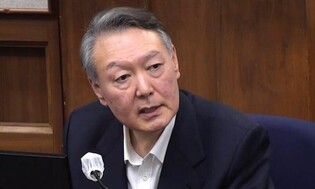
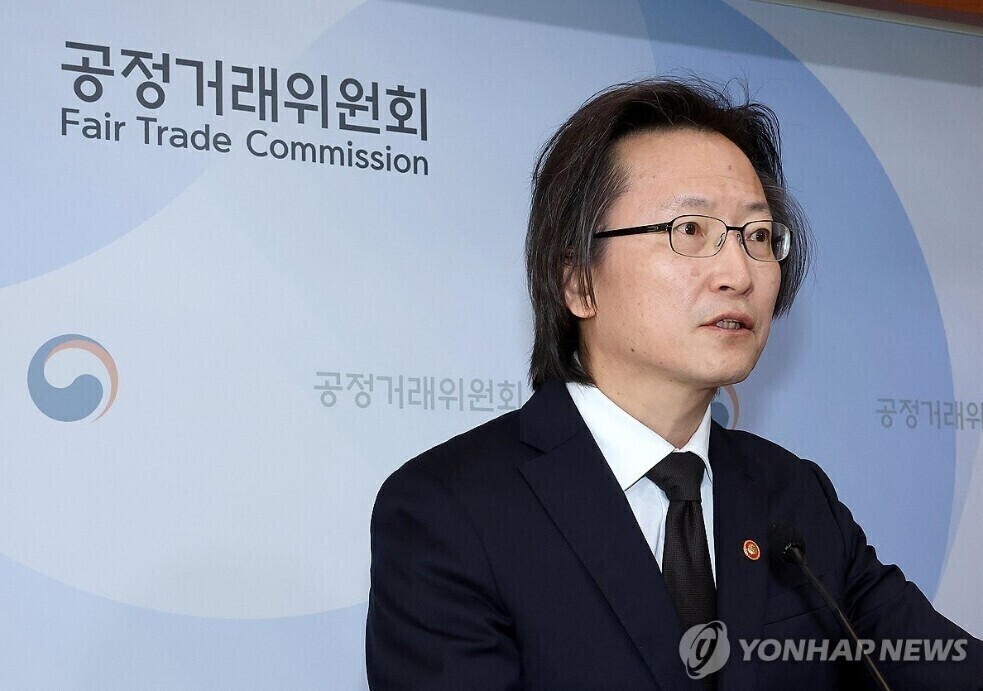
Joo Byung-ki, Chair of the Korea Fair Trade Commission. (Photo courtesy of Yonhap News Agency). |
[Alpha Biz= Paul Lee] South Korea’s competition watchdog has begun analyzing the drivers behind price increases in daily necessities such as ice cream products and over-the-top (OTT) video streaming services, sectors that have drawn criticism for excessive price hikes amid highly concentrated market structures. Authorities warned that strong enforcement measures could follow if collusion or other anticompetitive conduct is identified.
On Tuesday, the Korea Fair Trade Commission (KFTC) said it has commissioned a research study titled “Market Analysis on High Inflation in Monopoly and Oligopoly Goods Closely Related to Daily Life.” The study will focus on four sectors where market concentration is pronounced and price sensitivity is high: ice cream products, edible oils, movie theaters, and OTT services.
The KFTC plans to conduct an in-depth review of market conditions, cost structures, price trends, distribution channels, and relevant laws and regulations for the four sectors, with the aim of identifying the root causes of persistent inflation. The regulator will also examine potential regulatory and institutional reforms to stabilize prices, promote competition, and improve supply and distribution structures.
In addition to the four categories, the KFTC said it will continue to identify other daily necessities with monopolistic or oligopolistic characteristics that show prolonged high inflation.
“These are items that have faced continued criticism for maintaining elevated prices despite falling costs,” a KFTC official said, adding that “depending on the findings, additional probes into possible collusion may be conducted, along with competition-enhancing regulatory reforms aimed at curbing price hikes.”
The move follows the KFTC’s recent enforcement action against major sugar producers. On February 12, the regulator concluded that CJ CheilJedang, Samyang Corporation, and Daehan Sugar colluded to fix sugar prices for nearly four years from February 2021 to April 2025, imposing provisional fines totaling 408.3 billion won. The case was widely viewed as a signal of the government’s determination to stabilize prices by cracking down on market-distorting practices. Authorities have said they plan to swiftly address suspected collusion in other staples such as flour, eggs, and pork.
The latest review of the four sectors is seen as part of the same broader policy push. Joo Byung-ki said at a briefing on February 12 that the regulator would “respond decisively to ensure that collusion harming people’s livelihoods is not even contemplated.”
Alphabiz Reporter Paul Lee(hoondork1977@alphabiz.co.kr)