




 |
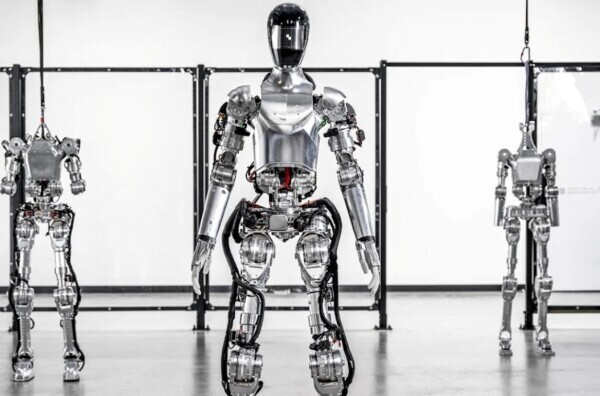
Figure AI humanoid robot. (Photo courtesy of Figure AI) |
[Alpha Biz= Kim Jisun] Global synthetic rubber leaders target humanoid robots’ “muscles,” while Korea’s chemical companies delay R&D moves
Global leaders in synthetic rubber from Japan and China are rapidly entering the soft robotics market—key to building the “muscles” of humanoid robots—while South Korean companies risk falling behind due to prolonged weakness in the petrochemical sector.
According to industry sources on Feb. 18, Tesla is known to be equipping its humanoid robot Optimus with actuators made from synthetic rubber produced by Ningbo Tuopu Group, a Chinese automotive parts supplier. Leveraging its experience in manufacturing NVH (noise, vibration and harshness) reduction components for vehicles, the company has internalized materials technology that absorbs shocks in robotic joints. Actuators—devices that drive joint movement—account for roughly 40% of a robot’s total hardware cost.
Soft robotics uses flexible materials such as silicone and rubber instead of rigid metals, enabling movements closer to those of the human body. These materials are valued for both impact resistance and fine-motor flexibility. Market researcher Global Market Insights projects the global soft robotics market will grow to $35.33 billion by 2034, nearly 18.7 times larger than the estimated $1.89 billion in 2024.
Japan entered the field earlier than China. Bridgestone, one of the world’s top three tire makers, began developing synthetic rubber for robotics in the 2010s by applying its tire-making expertise. The company commercialized robotic hands that generate five to ten times the strength of a human by inflating and deflating rubber tubes.
Japanese chemical firms are also expanding beyond joints into the “artificial skin” segment. Shin-Etsu Chemical has secured patents for silicone-based smart skin capable of sensing pressure and temperature, while Sumitomo Riko has developed flexible tactile sensors using electrically conductive rubber.
In contrast, South Korean synthetic rubber producers—including Kumho Petrochemical, Lotte Chemical, and LG Chem—are postponing the addition of robotics-related products to their portfolios until at least next year. They are still weighing when to begin full-scale R&D.
Industry analysts attribute the delay to weak cash flow caused by China’s low-cost offensive in petrochemicals, combined with ongoing investment in advanced materials such as solution styrene-butadiene rubber (SSBR) for electric vehicles. As a result, Korea’s chemical sector faces growing concern that it may miss an early window in the fast-expanding soft robotics race.
Alphabiz Reporter Kim Jisun(stockmk2020@alphabiz.co.kr)